At 100 - Earle Brown and Morton Feldman
Jan
31
8:00 PM20:00

At 100 - Earle Brown and Morton Feldman

Tickets

Arcana is excited to perform works by Earle Brown and Morton Feldman celebrating their centenary this year.

PROGRAM

Earle Brown: Four Systems (1954)

Earle Brown: December 1952 from Folio I (1952)

Earle Brown: One Through Five from Folio II (1970)

Morton Feldman: Only (1947)

Morton Feldman: A Very Short Piece for Trumpet (1986)

Morton Feldman: King of Denmark (1964)

Morton Feldman: Projection 1 (1950)

PERFOMERS:

Carlos Santiago, violin
Melinda Rice, viola
Tom Kraines, cello
David Middleton, electric bass
Tessa Ellis, trumpet
Jay Krush, tuba
Aaron Stewart, saxophone
Noa Even, saxophone
Nicholas Handahl, flute
Jonathan Leeds, clarinet
Anne Ishii, percussion and electronics
Tara Middleton, voice
Andy Thierauf, percussion

ABOUT THE ARTISTS

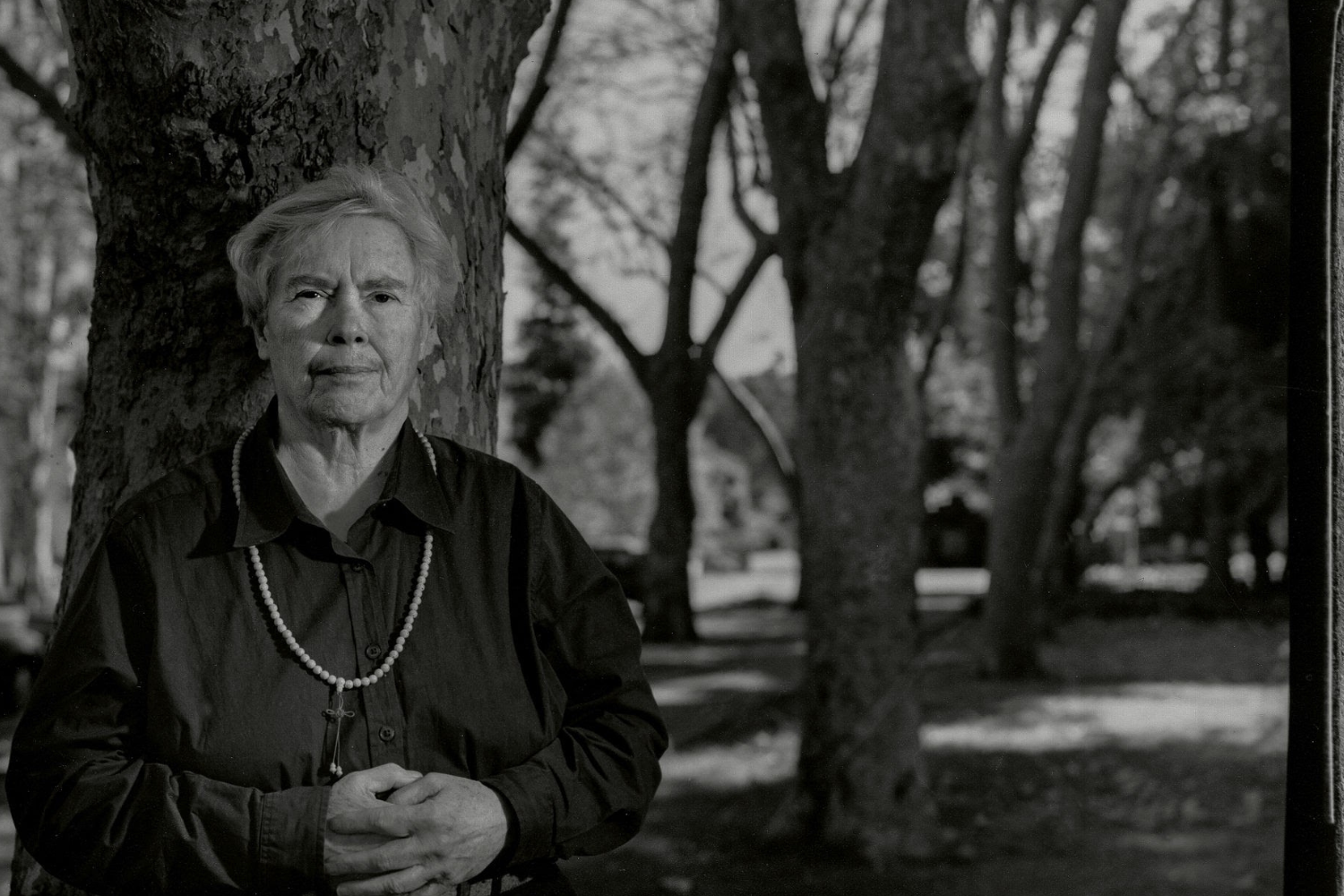
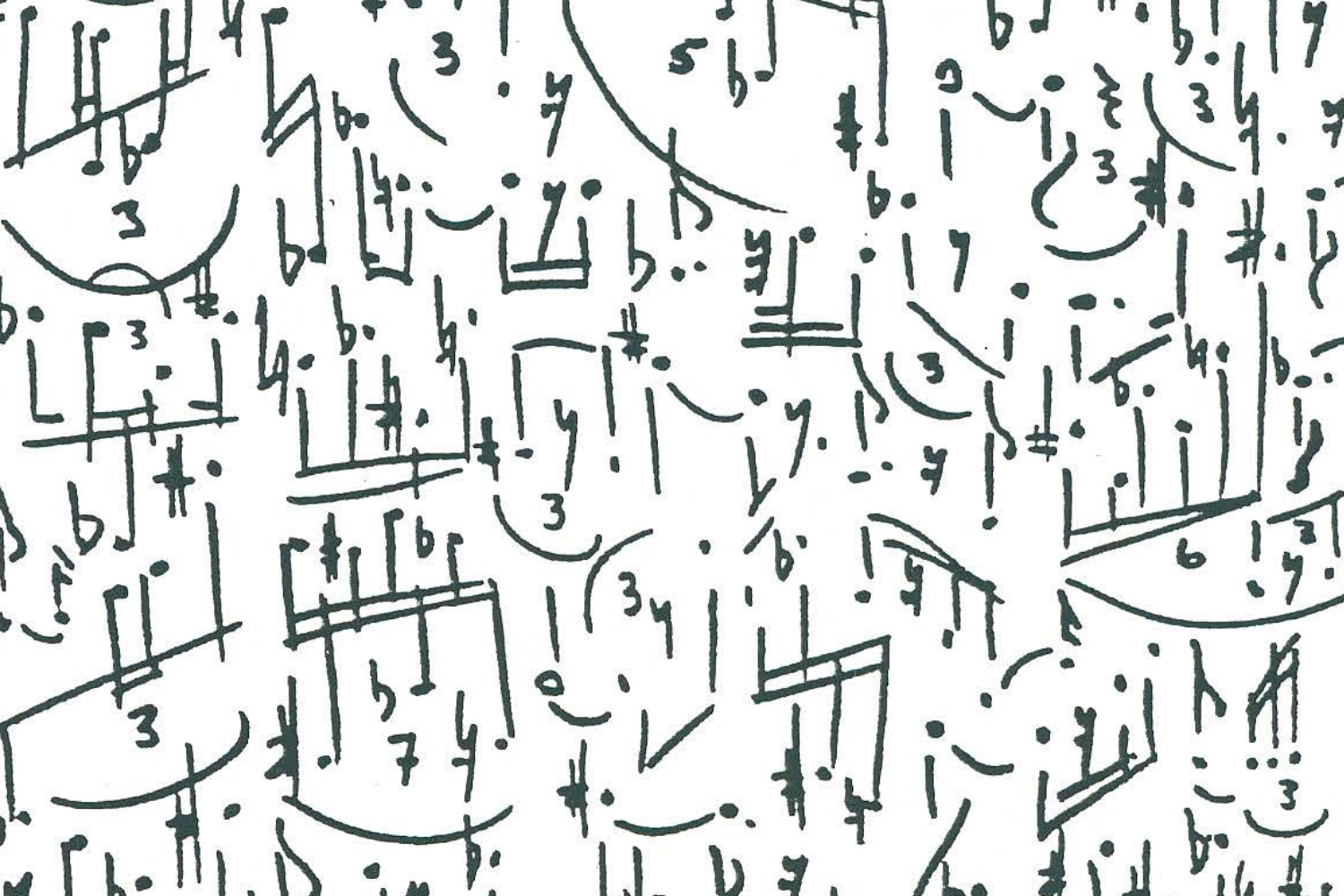
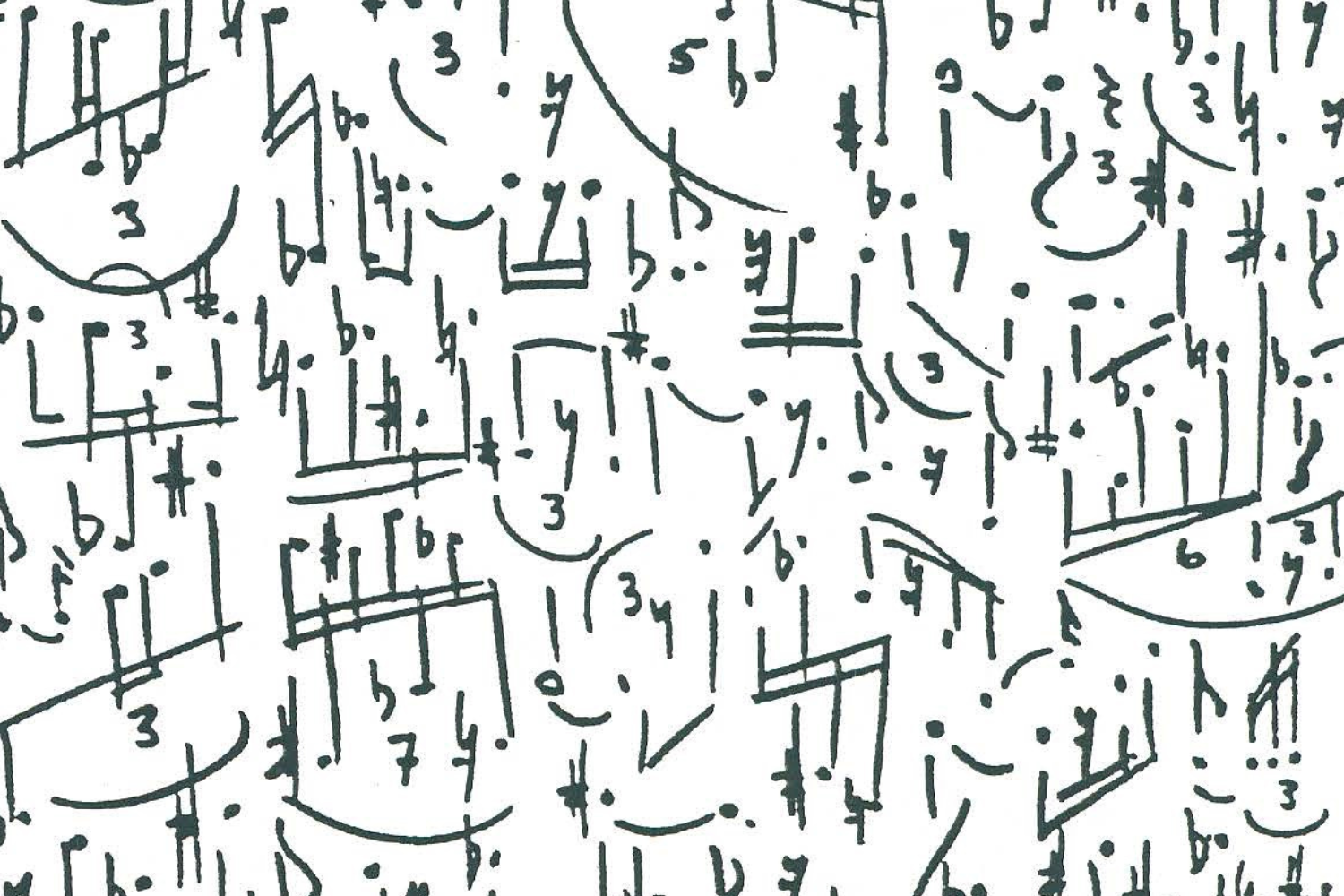
Earle Brown (1926–2002) was an American experimental composer whose works in graphic notation and open form were seminal to the history of postwar music. He explored the limits of traditional staff notation to the point of abstraction in Folio and 4 Systems (1952–54) and prompted performers to make their own determinations about pitch, time, intensity, timbre and attack—an approach that contrasted sharply with the composer-controlled treatment of sound implicit in serialism and total organization. Brown used graphic notation sparingly after 1960 when he began writing large-scale open form works for orchestra. He had composed 25 Pages (1953) for piano in open form, but to achieve collective mobility among 18 musicians and conductor in Available Forms 1 (1961), and 98 musicians and 2 conductors in Available Forms 2 (1962), Brown wrote predominantly through-composed events and devised a cueing system for conductors to signal in-performance decisions about the order and phrasing of these events. This cueing system appears in over a dozen open form works across his career. Brown described his sound ideal as spontaneous, warm and responsive to the moment. Unbeholden to the stylistic boundaries that dictated new music during his time, Brown embraced a wide range of influences including jazz improvisation, twelve-tone technique, the Schillinger system, the indeterminacy of his New York School colleagues (John Cage, Morton Feldman, Christian Wolff), electroacoustics, action painting, collage and the mobile sculptures of Alexander Calder.

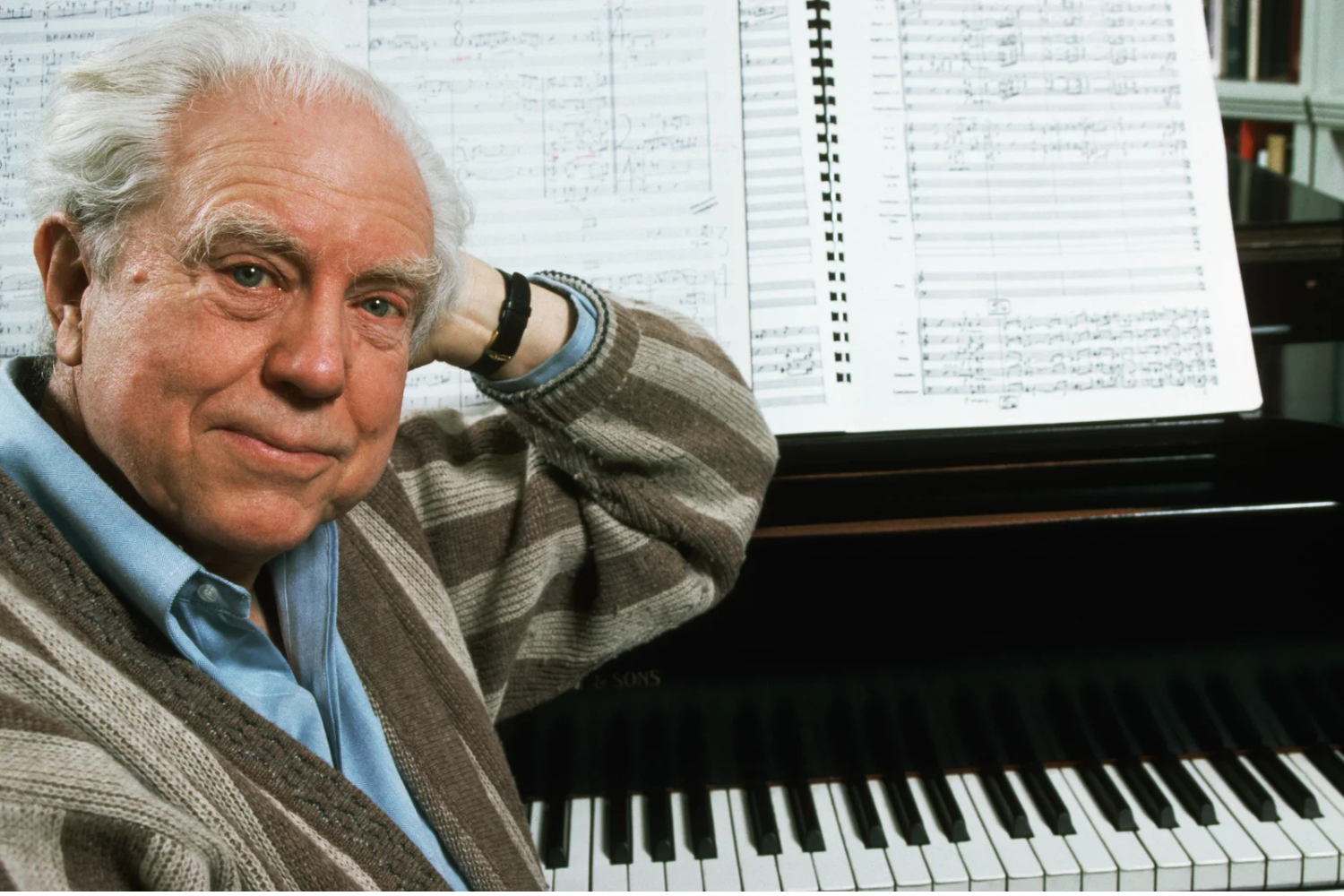
MORTON FELDMAN was born in New York in 1926. He studied music and piano with several teachers at a young age before becoming a student of Stefan Wolpe after graduating from high school in 1944. Although Feldman mastered atonality, the pair spent much of their time together simply arguing about music and Feldman struggled to find an artistic voice when composing music.

Feldman's artistic development took shape in 1949 when Feldman met composer John Cage, commencing a lifelong artistic association of crucial importance to American music in the 1950s. Cage was instrumental in encouraging Feldman to have confidence in his instincts, which resulted in totally intuitive compositions. From then on, Feldman never worked with any systems that anyone has been able to identify, working from moment to moment, from one sound to the next. During this vital time of his musical career, his friends during the 1950s in New York included the composers Earle Brown and Christian Wolff; painters Mark Rothko, Philip Guston, Franz Kline, Jackson Pollock and Robert Rauschenberg; and pianist David Tudor.

The painters in particular influenced Feldman to search for his "physical sound-world," one that was more immediate and direct than had existed before. It is said that his use of repetition of individual elements creates a vast field of shimmering colors and textures. He rejected standard notation which resulted in his experimentation with graph notation; Projection 2 was one of his earliest scores using this highly visual system. In these scores, the players have some input in the overall structure as they select their notes from within a given register and time. These led to a series of groundbreaking works, often considered controversial in regard to their inaccessibility to the general public. However, Feldman was not happy with the amount of improvisation and freedom given to the performer, so he returned to more precise forms of notation. It was at this time that many would say he created his most "visual" pieces, including Rothko Chapel, Why Patterns?, and For Philip Guston.

After partially rejecting the use of graph notation and aleatory music, his works of the late 70s and 80s grew longer: his compositions expanded in length to such a degree that allowed him to focus on the passage of time and the movement of blocks of sound through musical space. The scale of these works allowed Feldman to have control over the piece he wrote. Nine of Feldman's one-movement compositions last for over one and a half hours each. His infrequently played String Quartet No. 2 can last up to six hours, with no break for the performers.

In 1973, the University of New York at Buffalo asked Feldman to become the "Edgard Varèse Professor," a post he held for the rest of his life. In June 1987, Morton Feldman married the composer Barbara Monk. On September 3, 1987, he died at his home in Buffalo at age 61.

This program is supported by the Penn Treaty Special Services District

View Event →
Postal Pieces 2
Feb
13
8:00 PM20:00

Postal Pieces 2

TICKETS

Arcana is excited to present the second iteration of “Postal Pieces,” a concert featuring living composers in Philadelphia a beyond composing postcard-sized works inspired by James Tenney’s unorthodox set of compositions.

Tenney’s “Postal Pieces,” composed between 1954 and 1971, are a series of ten concise works each printed on a postcard. These pieces capture Tenney’s exploration of sound and form, focusing on minimalist structures, intonation, and what he called “Swell” forms—gradual crescendos and decrescendos that create a unique auditory experience. Conceived originally as musical “letters” to friends and collaborators, such as Pauline Oliveros and La Monte Young, these works reflect Tenney’s deep connections within the avant-garde music scene and his penchant for inviting listeners into meditative states of listening.

Sets of the these newly commissioned postcard works will be available for purchase at the concert, with all proceeds benefiting the Arcana New Music Ensemble. Previous postcard sets will also be available and are available to purchase online.

PROGRAM

Andrew Burke: This One Time
Anna Weesner: The Beauty of Effort
Cerulean Payne-Passmore: as if a tree still rooted, breathing soil and sunlight
Cynthia Folio: Neural Disarray
Elijah Daniel Smith: A Little
Evan Kassof: A Note From The Future
Jay Fluellen: Arcana Variances
Jacob Cooper: Noctilucence
Joshua Stamper: Pin
Joshua Marquez: Balikbayan
Melinda Rice: For One Or More Musicians: Known
Meredith Gilna: Meeting
Paul Schuette: Building Blocks
Richard Belcastro: Where Do We Go From Here?
Rosie Langabeer: unraveling, the
Sarah Hennies: As Long As Possible

ARCANA NEW MUSIC ENSEMBLE

Alize Rosznyai, voice
Carlos Santiago, violin
David Hughes, piano
Tom Kraines, cello
Jonathan Leeds, clarinet
Aaron Stewart, saxophone
Tessa Ellis, trumpet
Andy Thierauf, percussion

ABOUT THE ARTISTS

James Tenney (1934–2006) was an American composer, theorist, and performer renowned for his innovative contributions to experimental and electronic music. A student of notable figures such as Carl Ruggles, Edgard Varèse, and John Cage, Tenney was a central figure in the development of post-war avant-garde music. His work often explored concepts of indeterminacy, microtonality, just intonation, and the physics of sound, integrating mathematical and acoustical theories into his compositions.
Tenney’s diverse output includes works for computer-generated sound, instrumental ensembles, and unconventional notations that challenge traditional musical forms. He was also a significant educator, teaching at the California Institute of the Arts and York University, influencing a generation of composers with his boundary-pushing ideas. His collaborations and associations with artists such as Steve Reich, La Monte Young, and Philip Glass positioned him as a vital connector in the experimental music scene. Tenney’s legacy is marked by his relentless curiosity and his ability to blend rigorous theoretical frameworks with an intuitive approach to sound, profoundly shaping the landscape of contemporary music.

View Event →
Solo and Chamber Music of Elliott Carter
Mar
28
8:00 PM20:00

Solo and Chamber Music of Elliott Carter

TICKETS

Arcana is pleased to perform solo and chamber music of Elliott Carter.

PROGRAM:

Two Thoughts About the Piano
Figment V for marimba
Esprit Rude/Esprit Doux II
Epigrams
Enchanted Preludes
Gra for clarinet
Canon for 4

ARCANA NEW MUSIC ENSEMBLE:

Anna Lim - violin
Tom Kraines - cello
Nic Handahl - flute
Jonathan Leeds - clarinet
David Hughes - piano
Andy Thierauf - marimba

ABOUT THE ARTISTS

Composer Elliott Carter (December 11, 1908 - November 5, 2012) is internationally recognized as one of the most influential American voices in classical music, and a leading figure of modernism in the 20th and 21st centuries. He was hailed as “America’s great musical poet” by Andrew Porter and noted as “one of America’s most distinguished creative artists in any field” by his friend Aaron Copland. Carter’s prolific career spanned over 75 years, with more than 150 pieces, ranging from chamber music to orchestral works to opera, often marked with a sense of wit and humor. He received numerous honors and accolades, including the Pulitzer Prize on two occasions: in 1960 for his String Quartet No. 2 and in 1973 for his String Quartet No. 3. Other awards include Germany’s Ernst Von Siemens Music Prize and the Prince Pierre Foundation Music Award. Carter was the first composer to receive the United States National Medal of Arts, and is one of a handful of composers inducted into the American Classical Music Hall of Fame. He was recognized twice by the Government of France: being named Commander of the “Ordre des Arts et des Lettres,” and receiving the insignia of Commander of the Legion of Honor in September 2012.

Support for this program provided by the Amphion Foundation

View Event →

Cornelius Cardew: Treatise
Nov
21
8:00 PM20:00

Cornelius Cardew: Treatise

RSVP

Arcana New Music Ensemble is excited to be performing Cornelius Cardew’s groundbreaking work Treatise at The Rotunda.

Composed between 1962-1967, Treatise employs an entirely graphic score with symbols that at times looks like a traditional staff and clef and even note heads then morphs into beautiful esoteric shapes, curved lines, and large black dots, among others. Without any instruction for performance and almost 200 pages long, the work requires careful discussion and interpretation by the musicians to realize the work.

ARCANA NEW MUSIC ENSEMBLE

Nicholas Handahl – flute
Noa Even – saxophone
Melinda Rice – violin
Carlos Santiago – violin
Alyssa Almeida – cello
Andy Thierauf – percussion

ABOUT THE COMPOSER

Cardew was born into a family of artists in 1936. He grew up in Cornwall, England where until his admittance, at age 17, to the Royal Academy of Music in London. Trained as a pianist and cellist, Cardew had a great interest in the new ideas that were beginning to bloom around contemporary music at that time. He taught himself guitar so that he could take part in the British premiere of Pierre Boulez’s early complex masterwork Le marteau sans maître. As a young composer, Cornelius immersed himself in the hyper-serialist works of Boulez and Karlheinz Stockhausen, while also exploring the emerging discipline of composition for electronics. This latter interest led to his attendance of the Studio for Electronic Music in Köln where he began his relationship as Stockhausen’s assistant, most notably working with the German on the score to his massive work for four orchestras and choirs: Carré.

After hearing a concert of John Cage and David Tudor in 1958 Cardew turned away from the structure of Boulez and Stockhausen toward the new languages of indeterminate music being explored by Cage, Christian Wolff, Morton Feldman, and Earle Brown. It is arguable that Cardew took the graphic score and performer weighted composition of the New York school to a logical conclusion with works like the text based composition The Great Learning and Treatise. These compositions, by withholding interpretation of the signs that make up the scores, removed the expectation in performance to a much greater degree than most of his peers and predecessors.

In 1966, he joined AMM, an experimental improvising group in London with an instrumentation that grew around the central figures of Eddie Prévost, John Tilbury, and Keith Rowe. Even though the group maintained a strict improvisatory ideal, it featured Christian Wolff at one point, as well as Cardew. This relationship seems to have had a hand into leading Cardew further away from traditionally notated composition toward his graphic notation work of the 1960s.

In 1969, as a result of The Great Learning, Cardew formed The Scratch Orchestra with like-minded composers Michael Parsons and Howard Skempton. This group favored a populist approach to performance, featuring a combination of trained and untrained musicians, professed a “reverse seniority” hierarchy (or anti-hierarchy) and relied on graphic rather than traditional notation so that anyone could participate. The group operated until about 1974 at which time the politics of the group were leading to new avenues and a third period of activity and redefinition for Cardew.

Beginning in the early 1970s, Cardew concentrated his musical efforts on the political by creating music whose purpose was simultaneously populist, Marxist, Maoist, and also critical of the excesses of the avant-garde tradition represented by Stockhausen and Cage. Moving from hyper-serialism to the new rigor of graphic notation, Cardew’s music from this last period took English folk music tradition as the delivery system for populist political statements such as We Sing for the Future and Smash the Social Contract. Cardew was a co-founding member of the Central Committee of the Revolutionary Communist Party of Britain starting in 1979 and his political commitment began to overtake his musical output, culminating in controversial text Stockhausen Serves Imperialism. He died on December 13, 1981; the victim of a mysterious hit and run car accident. The driver was never located.

View Event →
Pure Lucia – Night 2: Duende Otherness
May
10
7:30 PM19:30

Pure Lucia – Night 2: Duende Otherness

TICKETS

Arcana is thrilled to be part of Pure Lucia – Night 2: Duende Otherness, the second night of a two-part program celebrating the work of composer Lucia Dlugoszewski presented by Bowerbird and FringeArts. This program traces Dlugoszewski’s artistic trajectory from her mid-career works, composed after firmly establishing her collaboration with choreographer Erick Hawkins, to the culminating masterworks of her later years. Featuring chamber music, solo works, and choreography, the evening highlights Dlugoszewski’s radical approach to sound, her inventive instrumentation, and her lifelong pursuit of new sonic possibilities. Performers include Either/Or Ensemble, trumpeter Peter Evans, Arcana New Music Ensemble, pianist Agnese Toniutti, the Daedalus Quartet, and the Erick Hawkins Dance Company.

Lucia Dlugoszewski’s name is pronounced LOO-sha dwoo-goh-SHEF-skee.

CONCERT PROGRAM

All music by LUCIA DLUGOSZEWSKI (1925 – 2000)

Lords of Persia (1965)
Either/Or
– Christa Van Alstine, clarinets
– Tiago Linck, trumpet
– Matt Melore, bass trombone
– Lauren Cauley, violin
– Russell Greenberg, percussion
– Chris McIntyre, conductor

Space is a Diamond (1970)
Peter Evans, trumpet

Excerpts from Black Lake (1969)
Arcana New Music Ensemble
– Jonathan Leeds, clarinet
– Molly Germer, violin
– Ju-Ping Song, timbre piano
– Andy Thierauf, percussion

INTERMISSION

Exacerbated Subtlety Concert (Why Does a Woman Love a Man?) (1997/2000)
Agnese Toniutti, timbre piano

Disparate Stairway Radical Other (1995)
For string quartet with five dancers; choreography *Elusive Pierce* by Katherine Duke

Daedalus Quartet
– Min-Young Kim, violin
– Matilda Kaul, violin
– Jessica Thompson, viola
– Thomas Kraines, cello

Erick Hawkins Dance Company
– Jason Hortin
– Hayley Meier
– JR Gooseberry
– Halie Landers
– Rylee Lucero

This event is part of PURE LUCIA, a retrospective of the life and work of Lucia Dlugoszewski. View the program for the previous night: Pure Lucia – Night 1: Quidditas Suchness

PROGRAM NOTES

The program opens with Lords of Persia (1965), performed by the New York-based Either/Or Ensemble. Written for a dance by Hawkins, the piece reflects Dlugoszewski’s deep interest in the Japanese concept of Nageire, which she described as a process of “flinging in” musical materials with a sense of reckless asymmetry.

Space is a Diamond (1970), performed by trumpeter Peter Evans, is one of Dlugoszewski’s most celebrated works. Composed for Gerard Schwarz, an early champion of her music, it remains one of the few pieces she published commercially and one of the most widely recognized in her catalog. The work demands extraordinary virtuosity, employing extended trumpet techniques, including extreme registers, rapid mute changes, and sweeping glissandi. Through these innovations, Dlugoszewski transformed the trumpet’s sonic identity, expanding its expressive range in ways that were groundbreaking for the time.

Philadelphia’s Arcana New Music Ensemble presents excerpts from Black Lake (1969), another work composed for a Hawkins dance. Dlugoszewski’s compositional style often reflected a fusion of Eastern and Western philosophical ideas, and Black Lake is no exception. Structured as a series of short movements, the work incorporates forms such as the fugue and chaconne alongside concepts drawn from Eastern aesthetics, including sabin, wabi, and p’o—ideas that emphasize imperfection, transience, and the expressive qualities of restraint. The piece also showcases some of Dlugoszewski’s most distinctive invented percussion instruments, including Ladder Harps, Tangent Rattles, and Square Drums, which lend the music an unmistakably original timbral palette.

Following intermission, pianist Agnese Toniutti performs Exacerbated Subtlety Concert (Why Does a Woman Love a Man?) (1997/2000), one of Dlugoszewski’s final completed works. This composition represents the culmination of nearly five decades of exploration and refinement in her approach to the timbre piano, a radical reimagining of the instrument that she developed through extended techniques and unconventional playing methods.

The evening concludes with Disparate Stairway Radical Other (1995), a work of rhythmic intensity and vivid textures for string quartet and five dancers, performed by the Daedalus Quartet and the Erick Hawkins Dance Company. Originally composed for Hawkins’s dance *Journey of a Poet*, this performance features new choreography by Katherine Duke, current artistic director of the Erick Hawkins Dance Company and a direct artistic descendant of both Hawkins and Dlugoszewski. A defining work in Dlugoszewski’s late career, the music brims with energy, constantly shifting between bold instrumental colors and striking timbral contrasts.

Duende, a concept famously explored by Federico García Lorca, speaks to an almost mystical force in artistic expression—an intensity that arises from deep emotional, physical, and even existential struggle. It is not simply passion or virtuosity but something raw, primal, and unpredictable, emerging from the tension between beauty and darkness, control and surrender. Otherness, in contrast, suggests a state of being outside the familiar, an estrangement from conventional frameworks that allows for new modes of perception and experience.

The program title Duende Otherness reflects Lucia Dlugoszewski’s pursuit of music that resists the expected and embraces the unknown. Duende evokes the visceral, almost physical energy of sound as a living force, while Otherness signals her commitment to breaking away from inherited traditions, whether through new instrumental techniques, unconventional structures, or her rejection of narrative in favor of pure sensory immediacy. In her work, sound does not represent or signify—it becomes, vibrating at the edge of the unfamiliar, inviting the listener into an experience beyond certainty.

View Event →
Pauline Oliveros: The Well and The Gentle
Jan
26
3:00 PM15:00

Pauline Oliveros: The Well and The Gentle

TICkETS

Tickets: Pay-what-you-wish suggested $15-$25

Arcana New Music Ensemble is thrilled to be performing Pauline Oliveros’ works The Well and The Gentle at the Icebox Project Space.

Written between 1982-1983 and commissioned by Philadelphia’s Relâche Ensemble, The Well and The Gentle are two of Oliveros’ text based intuitive pieces. Rooted in listening, the scores consist of written instructions, scales, and a rhythmic motif.

This program is presented by Bowerbird and is part of the Light and Sound Series at Icebox Project Space.

PROGRAM

Oliveros: The Well (1982)

Oliveros: The Gentle (1983)

ARCANA NEW MUSIC ENSEMBLE

Nicholas Handahl – flute
Noa Even – tenor saxophone
Melinda Rice – violin
Carlos Santiago – violin
Alyssa Almeida – cello
Anne Ishii – percussion
Andy Thierauf – percussion

ABOUT THE ARTISTS

Pauline Oliveros’ (1932-2016) life as a composer, performer and humanitarian was about opening her own and others’ sensibilities to the universe and facets of sounds. Her career spanned fifty years of boundary dissolving music making. In the ’50s she was part of a circle of iconoclastic composers, artists, poets gathered together in San Francisco. In the 1960’s she influenced American music profoundly through her work with improvisation, meditation, electronic music, myth and ritual.

She was the recipient of four Honorary Doctorates and among her many recent awards were the William Schuman Award for Lifetime Achievement, Columbia University, New York, NY,The Giga-Hertz-Award for Lifetime Achievement in Electronic Music from ZKM, Center for Art and Media, Karlsruhe, Germany and The John Cage award from from the Foundation of Contemporary Arts.

Oliveros was Distinguished Research Professor of Music at Rensselaer Polytechnic Institute, Troy, NY, and Darius Milhaud Artist-in-Residence at Mills College. She founded “Deep Listening®,” which came from her childhood fascination with sounds and from her works in concert music with composition, improvisation and electro-acoustics. She described Deep Listening as a way of listening in every possible way to everything possible to hear no matter what you are doing. Such intense listening includes the sounds of daily life, of nature, of one’s own thoughts as well as musical sounds.

“Deep Listening is my life practice,” Oliveros explained, simply. Oliveros founded Deep Listening Institute, formerly Pauline Oliveros Foundation, now the Center For Deep Listening at Rensselaer, Troy, NY. Her creative work is currently disseminated through The Pauline Oliveros Trust and the Ministry of Maåt, Inc.


Support for this program provided by the Penn Treaty Special Services District

View Event →
Postal Pieces
Oct
2
8:00 PM20:00

Postal Pieces

TICKETS

Arcana is excited to present “Postal Pieces,” a concert that draws inspiration from James Tenney’s unorthodox set of compositions. Tenney’s “Postal Pieces,” composed between 1954 and 1971, are a series of ten concise works each printed on a postcard. These pieces capture Tenney’s exploration of sound and form, focusing on minimalist structures, intonation, and what he called “Swell” forms—gradual crescendos and decrescendos that create a unique auditory experience. Conceived originally as musical “letters” to friends and collaborators, such as Pauline Oliveros and La Monte Young, these works reflect Tenney’s deep connections within the avant-garde music scene and his penchant for inviting listeners into meditative states of listening.

For this concert, the Arcana New Music Ensemble presents a new collection of postcard-sized works commissioned from nine Philadelphia-based composers, each inspired by the spirit of Tenney’s originals. The program features pieces by David Middleton, Andrea Clearfield, Erin Busch, Natacha Diels, Sepehr Pirasteh, James Diaz, Adam Vidiksis, Gene Coleman, and Nick Millevoi. Each composition reflects a dialogue with Tenney’s approach, exploring the boundaries between notation, interpretation, and experience.

Sets of the nine newly commissioned postcard works will be available for purchase at the concert, with all proceeds benefiting the Arcana New Music Ensemble.

PROGRAM

James Tenney: Swell Piece
David Middleton: All the Alleys Home
Andrea Clearfield: The Rest Between Two Notes
Erin Busch: wave tones
Natacha Diels: watermusic
Sepehr Pirasteh: New Norm
James Diaz: total internal reflection
Adam Vidiksis: Orbital Mechanics
Gene Coleman: Rippling Waves
Nick Millevoi: Greetings from the Alligator Farm

ARCANA NEW MUSIC ENSEMBLE

Nicholas Handahl, flute
Aaron Stewart, saxophone(s)
Tessa Ellis, trumpet
Jay Krush, tuba
Erin Busch, cello
Andy Thierauf, percussion

ABOUT THE ARTISTS

James Tenney (1934–2006) was an American composer, theorist, and performer renowned for his innovative contributions to experimental and electronic music. A student of notable figures such as Carl Ruggles, Edgard Varèse, and John Cage, Tenney was a central figure in the development of post-war avant-garde music. His work often explored concepts of indeterminacy, microtonality, just intonation, and the physics of sound, integrating mathematical and acoustical theories into his compositions.
Tenney’s diverse output includes works for computer-generated sound, instrumental ensembles, and unconventional notations that challenge traditional musical forms. He was also a significant educator, teaching at the California Institute of the Arts and York University, influencing a generation of composers with his boundary-pushing ideas. His collaborations and associations with artists such as Steve Reich, La Monte Young, and Philip Glass positioned him as a vital connector in the experimental music scene. Tenney’s legacy is marked by his relentless curiosity and his ability to blend rigorous theoretical frameworks with an intuitive approach to sound, profoundly shaping the landscape of contemporary music.

Presented by Bowerbird with support provided by The Presser Foundation

View Event →
 Music of James Tenney
Jun
8
8:00 PM20:00

Music of James Tenney

One of the most influential American composers of the 20th century, James Tenney (1934-2006) combined the experimental spirit of Cage and company with a rigorous grounding in acoustics, perception, and information theory. This program explores Tenney’s music for string instruments, from his diagrammatic Postal Pieces (1965-71) to his last major work, the string quartet Arbor vitae (2006). The centerpiece is Tenney’s 1982 composition Glissade, a five-movement work for viola, cello, contrabass, and delay system that serves as a compendium of his major compositional interests and techniques.


Cellogram (1971)
Carolina Diazgranados, cello
 

Harmonium #5 (1978)
Myanna Harvey, violin
Emma Hey, viola
Carolina Diazgranados, cello


Koan (1971)
Anna Lim, violin


Glissade (1982)
I. Shimmer  
II. Array (a’rising)
III. Bessel functions of the first kind
IV. Trias Harmonica
V. Stochastic-canonic Variations

Veronica Jurkiewicz, viola
Tom Kraines, cello
Evan Runyon, bass
with tape-delay system


Beast (1971)
Evan Runyon, bass
 

Arbor vitae (2006)
Anna Lim, violin I
Myanna Harvey, violin II
Emma Hey, viola
Tom Kraines, cello

maxresdefault.jpg
Tickets
View Event →
Tom Johnson: Rational Melodies
Mar
17
8:00 PM20:00

Tom Johnson: Rational Melodies

The American composer Tom Johnson (b. 1939) has made a career of quite literally composing by numbers. Motivated by mathematical concepts such as self-similarity, transformations, and tiling patterns, Johnson's compositions are rigorously formalistic, but his use of repetition and familiar musical materials makes the underlying processes recognizable and (usually) enjoyable. The centerpiece of this concert is Johnson's 1982 work Rational Melodies, a set of 21 short pieces each consisting of a single melodic part generated by more or less complicated mathematical procedures, creating perceptual patterns that both challenge and enchant the ears. 

THE PROGRAM

Johnson: Counting Keys (1982-89)
David Hughes, piano

Johnson: Rational Melodies (1982)
Tessa Ellis, trumpet
Joe Dvorak, clarinet
RJ McGhee, trombone
David Middleton, bass guitar
Dominic Panunto, bassoon

Johnson: Block Design for Piano (2005)
David Hughes, piano
 

13-Johnson-Tom-signiert.jpg
Tickets
View Event →